

Preparing for the Civil Services Examination conducted by the Union Public Service Commission (UPSC) is often described as a test not just of knowledge, but of patience, resilience, and strategic planning. Every year, lakhs of aspirants across India compete for a limited number of prestigious positions such as IAS, IPS, and IFS. In such an intensely competitive environment, the role of proper guidance becomes critical. However, traditional coaching models—especially in cities like Delhi—have long been associated with high costs, making quality preparation inaccessible for many.
In recent years, affordable UPSC online coaching has emerged as a game-changer. It combines quality education with accessibility, allowing aspirants from diverse backgrounds to prepare effectively without bearing overwhelming financial pressure. This article offers a comprehensive look at affordable UPSC online coaching, its growing importance, key features, benefits, and how institutes like Raj IAS Academy are contributing to making civil services preparation more inclusive and efficient.
The Rising Demand for Affordable UPSC Coaching
Why UPSC Preparation Needs More Than Books
- Structured study plan: Preparation requires a clear roadmap covering the vast syllabus without wasting time on low-priority topics.
- Regular mentorship: Expert guidance helps aspirants stay on track, avoid common mistakes, and refine strategy.
- Answer writing practice: Especially important for Mains, it builds clarity, speed, and articulation of thoughts.
- Strong current affairs understanding: Daily news must be linked with static subjects for better retention and application.
- Continuous evaluation: Mock tests and performance analysis help identify weak areas and improve accuracy.
Challenges of Traditional Coaching Model
- High financial burden: Expenses include coaching fees, rent, food, and travel.
- Relocation pressure: Moving to hubs like Delhi is not feasible for everyone.
- Limited accessibility: Talented aspirants from smaller towns often miss out due to cost or distance.
- One-size-fits-all approach: Classroom coaching may not suit individual learning speeds.
How Affordable Online Coaching Is Changing the Game
- Cost-effective learning: Quality education is now accessible at a fraction of traditional costs.
- Flexible schedules: Ideal for both full-time students and working professionals.
- Access to top educators: Learn from experienced faculty across India without relocating.
- Recorded lectures: Enables revision anytime and helps reinforce difficult concepts.
- Personalized pace: Aspirants can learn according to their own speed and comfort.
What Makes a UPSC Course Truly “Affordable”?

1. Complete Syllabus Coverage
A truly affordable course ensures you don’t need to buy multiple resources or enroll in additional classes later.
- Holistic Subject Coverage: The course must comprehensively include History (Ancient, Medieval, Modern), Polity, Geography, Economy, Environment, Science & Technology, and Ethics. Missing even one area can cost you marks.
- Integration of Prelims and Mains: Instead of teaching in isolation, good courses connect Prelims concepts with Mains answer-writing relevance, saving duplication of effort later.
- Balanced Depth: Not every topic needs the same level of detail. Affordable courses focus on exam-relevant depth—enough to answer questions accurately without overwhelming you.
- Linkage with PYQs (Previous Year Questions): This helps you understand what UPSC actually asks, preventing over-preparation of irrelevant topics.
In short, complete syllabus coverage avoids hidden costs—both financial and time-related.
2. Organized Learning Framework
Without structure, even the best content becomes ineffective.
- Clearly Defined Modules: Subjects are broken into manageable sections (e.g., Polity → Constitution → Fundamental Rights → Parliament).
- Timelines and Study Plans: Weekly or monthly schedules ensure steady progress and prevent backlog.
- Goal-Oriented Milestones: Regular checkpoints (like finishing a subject or taking a test) help track preparation.
- Reduced Decision Fatigue: Instead of constantly wondering “what to study next,” you simply follow the plan—saving mental energy.
A structured framework makes preparation efficient and stress-free, which is a major aspect of affordability.
3. Quality Study Material
Good material reduces the need to refer to multiple books.
- Concise and Crisp Notes: Instead of bulky textbooks, well-designed notes highlight only what matters for UPSC.
- Concept Clarity: Topics are explained in simple language with examples, diagrams, and flowcharts for better understanding.
- Regular Updates: Especially for subjects like Economy, Environment, and Current Affairs, updated content is crucial.
- Revision-Friendly Format: Bullet points, summaries, and mind maps help in quick revision before exams.
High-quality material saves time, effort, and additional expenses on extra resources.
4. Regular Test Series
Testing is where preparation turns into performance.
- Exam Simulation: Mock tests replicate actual UPSC conditions—timed papers, negative marking, and tricky questions.
- Performance Analysis: Detailed reports show accuracy, weak areas, and time management issues.
- Answer Explanations: Each question should come with a clear explanation—not just the correct answer but why other options are wrong.
- Progress Tracking: Regular testing helps you measure improvement over time.
A strong test series ensures you don’t just study—you learn how to apply knowledge effectively.
5. Mentorship and Doubt Resolution
Guidance is often the difference between confusion and clarity.
- Access to Experienced Mentors: Mentors who understand UPSC trends can guide you on what to prioritize and what to skip.
- Personalized Feedback: Suggestions based on your strengths, weaknesses, and background.
- Doubt-Clearing Support: Quick resolution of conceptual doubts prevents gaps in understanding.
- Motivation and Accountability: Regular interaction keeps you disciplined and mentally strong during long preparation phases.
Mentorship reduces trial-and-error learning, saving both time and effort.
Key Features of a High-Quality & Affordable UPSC Course
- Experienced Faculty: Learn from educators who understand UPSC inside out. At Raj IAS Academy, mentors don’t just teach—they simplify complex topics and guide you with proven strategies.
- Updated and Relevant Content: UPSC patterns change frequently, so your study material must stay current, exam-oriented, and aligned with recent trends and questions.
- Integrated Current Affairs: Daily news is linked with static subjects like Polity, Economy, and Environment, helping you build deeper understanding instead of isolated facts.
- Answer Writing Practice: Essential for Mains Success. Regular practice improves structure, clarity, and time management in descriptive answers.
- Performance Tracking: Continuous tests and detailed feedback help identify weak areas, monitor progress, and refine your preparation strategy effectively.
How Raj IAS Academy is Making UPSC Preparation Affordable
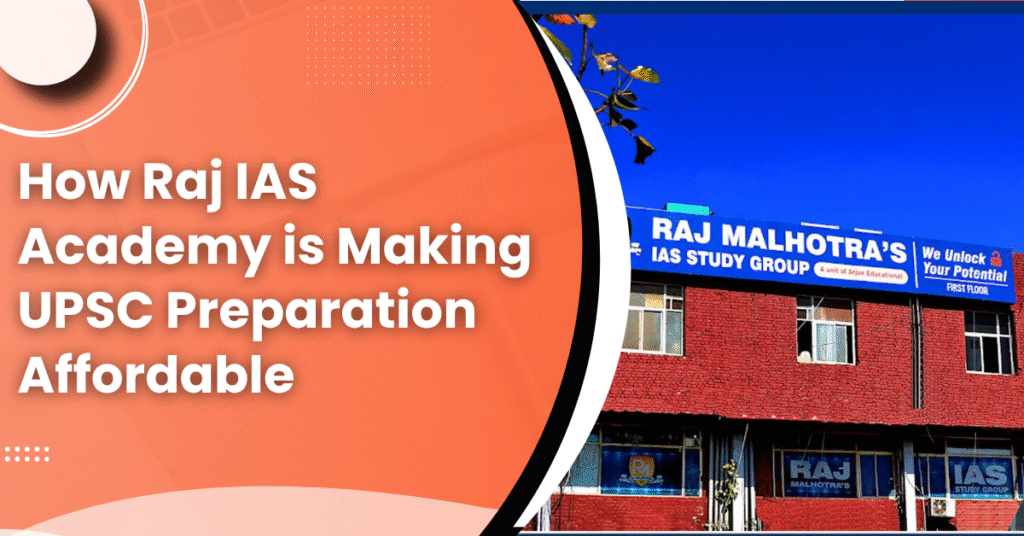
In a space where UPSC coaching is often expensive and inaccessible, Raj IAS Academy has positioned itself as a balanced option—offering quality guidance without placing a heavy financial burden on aspirants. Its approach focuses on value-driven education, ensuring that cost does not become a barrier to serious preparation.
Reasonable Fee Structure
The academy’s pricing is structured to accommodate students from different economic backgrounds. Instead of charging premium fees like many big coaching brands, Raj IAS Academy keeps its courses affordable while still maintaining academic depth. This allows aspirants—especially from smaller towns or middle-income families—to access quality preparation without financial stress.
Experienced Faculty Team
Affordability does not come at the cost of teaching quality. The academy brings together a team of experienced educators who specialize in individual subjects like Polity, Economy, History, and Environment. Their teaching focuses on clarity, relevance, and exam orientation, ensuring students understand concepts rather than just memorize facts.
Flexible Learning Modes
Recognizing that every aspirant has different needs, Raj IAS Academy offers both online and offline learning options. Students can attend classroom sessions or opt for digital learning with recorded lectures and live classes. This flexibility helps working professionals and remote learners prepare effectively without relocating or disrupting their routine.
Comprehensive Test Series
The academy provides a well-designed test series that closely follows the UPSC pattern. Regular tests, combined with detailed explanations and performance analysis, help students identify weak areas and improve accuracy. This structured evaluation system ensures continuous progress without the need for additional costly resources.
Proven Mentorship Approach
One of the standout aspects is its mentorship model. Instead of a one-size-fits-all system, mentors guide students based on their individual strengths and weaknesses. The focus is on building conceptual clarity, maintaining discipline, and developing a smart exam strategy—three pillars essential for clearing Prelims.
Beyond Affordability: Building the Right Mindset
Raj IAS Academy doesn’t limit itself to syllabus completion. It actively works on shaping analytical thinking and exam temperament. Aspirants learn how to approach questions logically, manage time under pressure, and stay consistent—skills that are often overlooked but crucial for success in UPSC.
Choosing the Right UPSC Course
- Check faculty credentials and experience: Look into the teachers’ background—whether they specialize in UPSC preparation, have years of teaching experience, or a deep understanding of exam trends. Experienced faculty can simplify complex topics and guide you with proven strategies.
- Attend demo classes before enrolling: Demo sessions give you a real feel of the teaching style, clarity of explanation, and course structure. It helps you decide whether the learning approach suits your understanding.
- Compare syllabus coverage across institutes: Ensure the course covers the entire UPSC Prelims syllabus in a balanced and structured way. Some institutes may overemphasize certain subjects while neglecting others—avoid such gaps.
- Read genuine student reviews: Go beyond promotional testimonials. Look for honest feedback from past students regarding teaching quality, test series, and overall support to get a realistic idea.
- Evaluate mentorship and doubt support: Strong mentorship can significantly improve your preparation. Check if the institute offers regular doubt-solving sessions, one-on-one guidance, and performance tracking.
- Look for demo opportunities and transparency: Reputed institutes like Raj IAS Academy often provide demo classes and clear course details, allowing aspirants to make informed and confident decisions before enrolling.
Conclusion
Affordable UPSC online coaching has transformed civil services preparation in India by removing financial and geographical barriers, making quality education accessible to aspirants from diverse backgrounds. However, selecting the right program is crucial—it should provide structured learning, experienced faculty, updated content, and strong mentorship without high costs. Institutes like Raj IAS Academy highlight how effective guidance can remain affordable, reflecting a larger shift toward inclusive education. Ultimately, success in UPSC depends on perseverance, discipline, and a smart strategy supported by the right mentorship.