



Preparing for the Union Public Service Commission (UPSC) Civil Services Examination is often described as one of the most demanding academic journeys in India—and rightly so. With its vast syllabus, evolving pattern, and intense competition, cracking this exam requires more than just hard work. It demands clarity, consistency, and, most importantly, the ability to resolve doubts at the right time.
In this context, UPSC coaching with a strong doubt-solving mechanism has emerged as a crucial support system for aspirants. It bridges the gap between passive learning and active understanding, ensuring that students don’t just consume information but truly internalize it.
Let’s explore why doubt solving is such a critical component of UPSC preparation, how coaching institutes are integrating it effectively, and how institutions like Raj IAS Academy are redefining the way aspirants learn.
What Makes Doubt Solving So Important?

- Builds Conceptual Clarity
Doubt solving helps you truly understand a topic rather than just memorizing it. Subjects like polity or economics aren’t meant to be crammed—they need discussion and questioning. When you ask doubts about concepts like federalism or inflation targeting, you begin to see the bigger picture, making your foundation much stronger.
- Prevents the Build-Up of Conceptual Errors
A small misunderstanding today can grow into a larger issue tomorrow. If doubts are not cleared in time, they tend to accumulate and create confusion in later stages of preparation. Regular doubt-solving works as a checkpoint, helping you stay aligned with the correct understanding and preventing the carry-forward of mistakes.
- Improves Answer Writing
Many aspirants struggle not because they don’t know the answer, but because they can’t express it effectively. Doubt-solving sessions often involve discussions and feedback, which help you structure your thoughts better and present answers more clearly in the exam.
- Boosts Confidence
There’s a big difference between studying with confusion and studying with clarity. When you know your doubts will be resolved quickly, you feel more confident and motivated. This confidence reflects in your preparation, revision, and ultimately, your performance in the exam.
Traditional vs Modern Doubt-Solving Approaches

Traditional Coaching Model
In conventional classrooms, doubt solving was often limited to:
- Asking questions during or after class
- Occasional doubt sessions
- Limited one-on-one interaction
While helpful, this approach had limitations—especially for shy students or those needing more personalized attention.
Modern Coaching Model (Hybrid & Online)
Today, UPSC coaching has evolved far beyond traditional classroom lectures. Institutes now focus on creating an interactive and supportive learning environment where doubt-solving is not an afterthought, but a core part of the preparation process.
- Live Interactive Classes: Instead of one-way lectures, students now attend live classes where they can ask questions instantly. This real-time interaction helps clear confusion on the spot and keeps students actively engaged throughout the session.
- Dedicated Doubt Portals: Most coaching platforms provide 24/7 doubt portals where students can post their queries anytime. Whether it’s a conceptual issue or a factual doubt, faculty members or mentors respond systematically, ensuring no question goes unanswered.
- One-on-One Mentorship: Personal mentorship has become a key feature of modern coaching. Mentors guide students individually—not just academically, but also in terms of strategy, time management, and handling stress during preparation. This personalized attention makes a big difference.
- Peer Discussion Forums: Learning is no longer limited to teachers. Through peer discussion groups, students exchange ideas, share notes, and explain concepts to each other. Often, a fellow aspirant can simplify a topic in a way that feels more relatable and easier to grasp.
- Answer Writing Feedback: Regular answer writing practice with detailed feedback helps students identify their mistakes and improve continuously. It bridges the gap between knowledge and presentation—an essential skill for cracking the Mains exam.
Overall, this shift from passive learning to an interactive, student-centric approach has made UPSC preparation more effective, structured, and less isolating for aspirants.
Raj IAS Academy: A Focus on Clarity and Mentorship
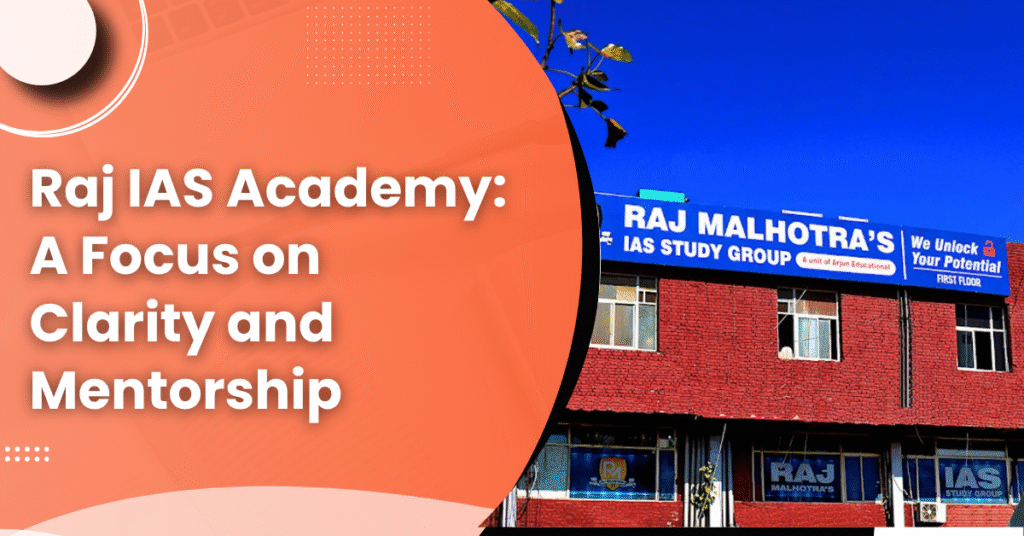
Among the growing number of UPSC coaching platforms, Raj IAS Academy has built a strong reputation for integrating doubt solving into its core teaching methodology.
1. Structured Doubt-Solving System
One of the strongest pillars of Raj IAS Academy is its well-organized and accessible doubt-solving framework. Unlike many coaching platforms where doubts often remain unattended or delayed, the academy ensures that every student has multiple avenues to seek clarity.
During live classes, students are encouraged to actively participate and ask questions in real time. This creates an interactive environment where learning becomes a two-way process rather than a passive experience. In addition to this, the academy conducts dedicated doubt-clearing sessions, where faculty focus entirely on addressing student queries in depth without the pressure of completing a syllabus.
For students who may not feel comfortable asking questions publicly or who study at different hours, there are online query platforms where doubts can be posted anytime. Faculty members or mentors respond promptly, ensuring that confusion does not linger for long. This multi-channel system ensures that every doubt—big or small—is acknowledged and resolved, building a strong conceptual foundation for aspirants.
2. Personalized Mentorship
What truly sets Raj IAS Academy apart is its emphasis on individual attention and mentorship. In a journey as demanding as UPSC preparation, generic guidance often falls short. The academy understands that each aspirant comes with a unique background, learning pace, and set of challenges.
Instead of treating students as just another name in a large batch, mentors take the time to understand their strengths, weaknesses, and goals. This personalized approach allows for targeted improvement. For instance, a student struggling with answer writing will receive focused guidance in that area, while another facing difficulty in conceptual subjects like polity or economy will get additional clarity and support.
Mentors play a crucial role in helping students:
- Identify weak areas that may not be immediately obvious
- Design realistic and achievable study plans, avoiding burnout
- Improve answer-writing skills through continuous feedback
- Stay motivated and consistent, especially during phases of self-doubt
This mentorship often becomes the backbone of a student’s preparation, providing not just academic guidance but also emotional support during a long and challenging journey.
3. Integration with Test Series
Another key strength of Raj IAS Academy lies in how seamlessly doubt-solving is integrated with its test series programs. Rather than treating tests as isolated evaluation tools, the academy uses them as powerful learning opportunities.
After each test, students receive detailed and constructive feedback, highlighting both their strengths and areas that need improvement. Faculty members go beyond just marking answers—they explain why a particular approach works and how it can be improved further.
Common mistakes observed across students are discussed in group sessions, helping aspirants learn not only from their own errors but also from others’. At the same time, individual doubts are addressed personally, ensuring that every student understands their specific shortcomings.
This continuous loop of testing → feedback → doubt-solving → improvement creates a highly effective preparation cycle. Over time, students develop better accuracy, clarity, and confidence—qualities that are crucial for clearing the UPSC examination.
4. Focus on Answer Writing
Clearing the UPSC Mains examination requires more than knowledge—it demands the ability to present ideas clearly, concisely, and effectively. Raj IAS Academy places a strong emphasis on answer writing practice, ensuring that students are not just learning but also applying their knowledge in the right format.
Aspirants often face doubts related to:
- How to structure answers within limited time
- What kind of content and examples to include
- How to improve presentation and readability
The academy addresses these concerns through detailed answer evaluations and discussions. Faculty members provide actionable feedback, guiding students on how to introduce answers, maintain logical flow, and conclude effectively.
Over time, this consistent practice helps students develop a natural writing style that aligns with UPSC expectations. More importantly, it boosts their confidence, making them better prepared to handle the pressure of the actual examination.
5. Experienced Faculty
At the core of Raj IAS Academy’s success is its team of highly experienced faculty members. With years of teaching and mentoring experience, they possess a deep understanding of the evolving nature of the UPSC examination.
What makes them particularly effective is their ability to simplify complex topics. Subjects like polity, economy, or international relations can often feel overwhelming, but the faculty break them down into easily understandable concepts. This clarity significantly reduces confusion and minimizes the number of lingering doubts.
Moreover, their experience allows them to anticipate common areas where students typically struggle. As a result, they proactively address these issues during teaching itself, making the learning process smoother and more efficient.
How Doubt Solving Impacts Different Stages of UPSC

Prelims Stage
- Clarifies factual and conceptual confusion
- Helps eliminate incorrect options
- Improves accuracy and speed
Mains Stage
- Enhances answer quality
- Improves structuring and articulation
- Develops analytical thinking
Interview Stage
- Builds clarity of thought
- Prepares candidates for unpredictable questions
- Strengthens confidence
Challenges in Doubt Solving
- Hesitation in Asking Questions: Many aspirants hold back their doubts because they feel shy or worry about being judged by others. This hesitation can quietly slow down learning. A healthy classroom or online environment—where questions are welcomed and no one feels embarrassed—can make a big difference in helping students open up.
- Delayed Responses: Sometimes, doubts don’t get resolved quickly, especially in large batches or less interactive setups. This delay can break the flow of study and create confusion. That’s why it’s important to choose a coaching system or platform that responds promptly and keeps the learning process smooth.
- Superficial Answers: Not every answer truly clears the concept. Some explanations are rushed or lack depth, leaving students with partial understanding. Aspirants should aim for clarity at the root level, asking follow-up questions if needed, rather than settling for quick, surface-level answers.
- Overdependence on Coaching: While coaching institutes play a supportive role, relying entirely on them can limit independent thinking. Real progress comes when students actively engage in self-study and use doubt solving as a tool to strengthen—not replace—their own efforts.
Tips for Aspirants: Making the Most of Doubt Solving

- Maintain a Doubt Notebook: Instead of letting confusion pile up in your mind, make it a habit to jot down every doubt the moment it arises. Think of this notebook as your personal “clarity tracker.” Over time, you’ll not only see your progress but also notice patterns in your weak areas, which helps you improve strategically.
- Revise Clarified Concepts: Getting a doubt solved is just the first step—real learning happens when you revisit that concept later. Spend a few minutes reinforcing what you’ve understood. This repetition ensures the concept stays with you during exams and doesn’t slip away under pressure.
- Engage Actively: Don’t stay in passive mode. Whether it’s a classroom session, an online forum, or a peer discussion group, actively participating sharpens your thinking. Sometimes, you’ll find that someone else’s doubt is exactly what you needed to understand a concept better.
- Don’t Delay: Doubts are like small cracks—ignore them, and they grow bigger over time. Address them as soon as possible while the topic is still fresh in your mind. Quick clarification prevents confusion from snowballing and keeps your preparation smooth and confident.
Conclusion
UPSC preparation isn’t really about counting study hours—it’s about how deeply you understand what you’re learning. That’s where doubt-solving becomes so important, turning confusion into clarity and helping your efforts actually pay off. Institutes that focus on proper mentorship and personalized guidance, like Raj IAS Academy, make this journey a lot more manageable for aspirants. In the end, cracking UPSC isn’t just about knowledge—it’s about building clarity, confidence, and staying consistent, and every doubt you clear takes you one step closer to success.